How to Identify Boston Butt as Beef or Pork
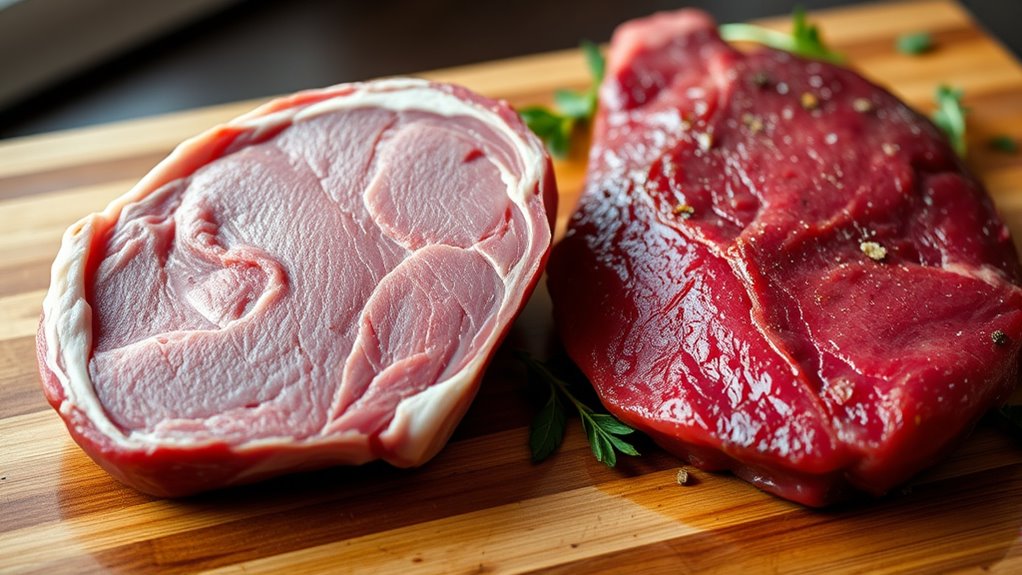
You can identify Boston butt as pork because it comes from the pig’s upper shoulder, never beef. It’s usually pink with fine marbling and a soft fat cap, unlike beef shoulder cuts that are darker with coarser texture and firmer fat.
Pork Boston butt is tender and shreds easily after cooking, while beef is denser.
Knowing these clues helps you tell pork Boston butt apart from beef or other pork cuts. Keep exploring to uncover more details about these differences.
What Is a Boston Butt and Where Does It Come From?
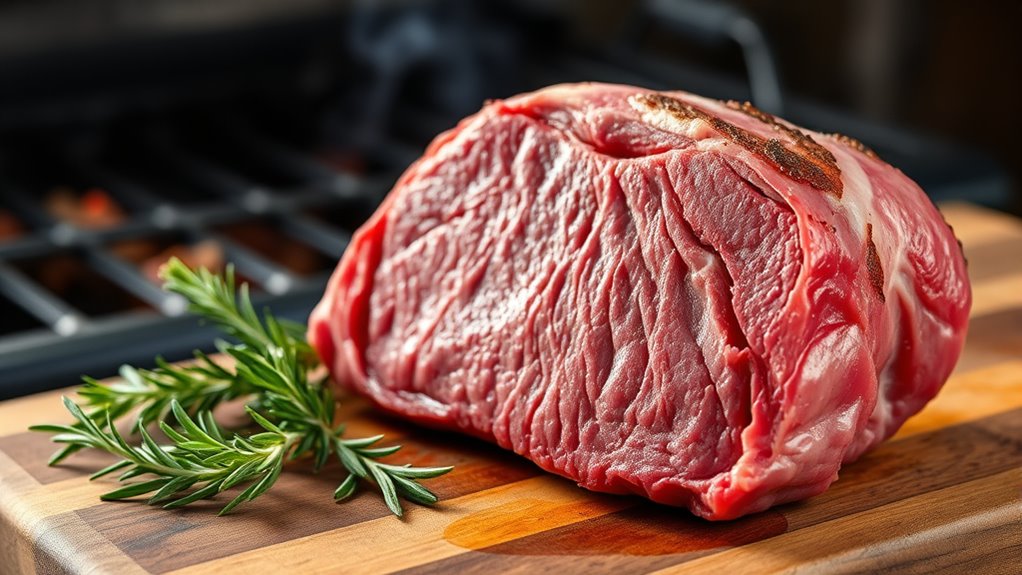
What exactly is a Boston butt, and where does it come from? The Boston butt is a cut of pork that comes from the upper part of the pig’s shoulder. You might also hear it called pork butt or pork shoulder, but technically, the Boston butt refers specifically to the pork shoulder’s thicker, well-marbled section.
This cut is prized for its fat content, which makes it ideal for slow cooking methods like barbecue and pulled pork. Unlike beef, there’s no such thing as a Boston butt from a cow. Beef shoulder cuts go by names like chuck or shoulder clod.
Why Is Boston Butt Always Pork, Not Beef?
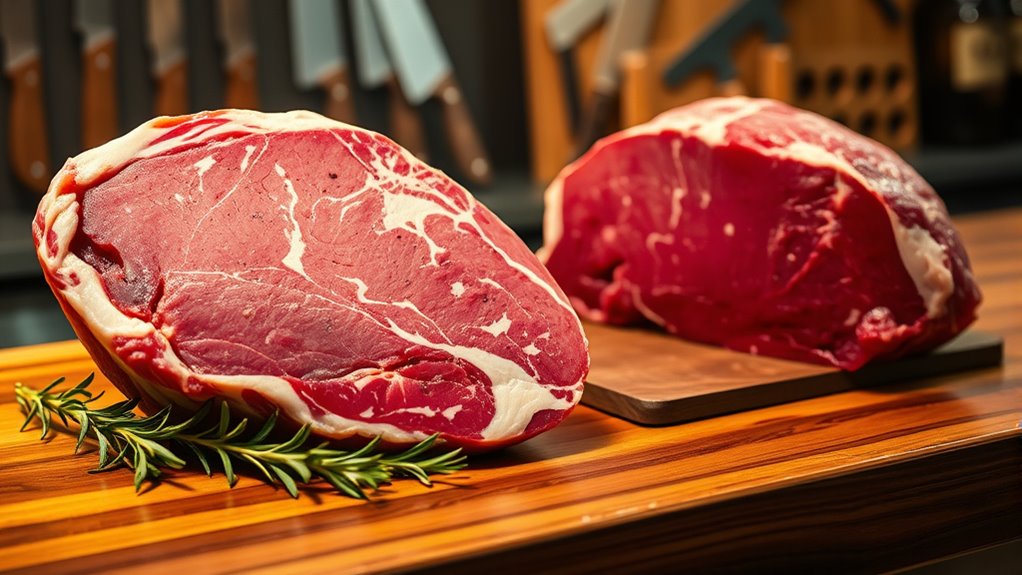
Since Boston butt specifically refers to a cut from the pig’s upper shoulder, it’s always pork and never beef. The term “butt” actually comes from old New England butchering practices, where pork shoulder cuts were stored in barrels called “butts.”
This historical context makes the Boston butt label exclusive to pork. Beef cuts don’t use this terminology; instead, similar sections are called shoulder or chuck. When you open a new account with a butcher or shop online, knowing this helps you avoid confusion and guarantee you get exactly what you want.
Understanding that Boston butt is uniquely pork is well worth your time, especially if you’re looking to master cooking or identifying cuts. So, anytime you see “Boston butt,” you can be confident it’s pork, not beef.
Visual Differences: Boston Butt vs. Beef Cuts
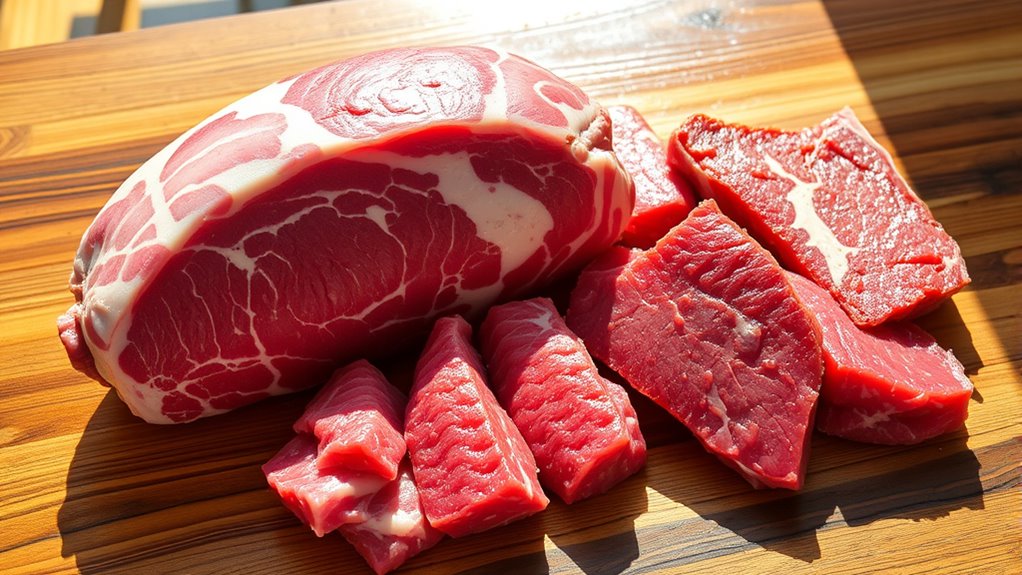
How can you tell a Boston butt from a beef shoulder just by looking? Focus on these visual clues:
- Shape and Size: Boston butt is rectangular and smaller (4–8 pounds), while beef shoulder or chuck is larger and bulkier.
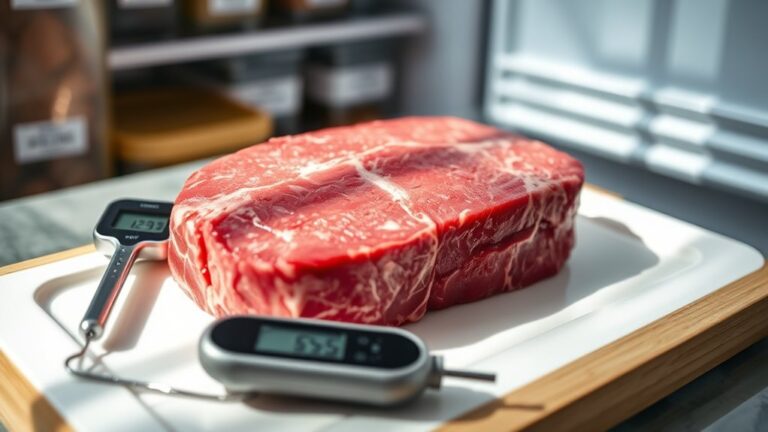
- Color: Pork Boston butt has a pinkish hue with fine marbling; beef cuts are darker red with more visible muscle fibers.
- Fat Layer: Boston butt often has a noticeable fat cap on top; beef shoulder may have more connective tissue and bone.
- Texture: Pork Boston butt looks softer and more tender, whereas beef shoulder appears denser and coarser.
How to Differentiate Boston Butt From Pork Shoulder
Recognizing the differences between Boston butt and beef shoulder sets the stage for spotting distinctions within pork cuts themselves. When you compare Boston butt to pork shoulder, focus on the cut’s location and texture. Boston butt comes from the upper part of the pig’s shoulder and usually features a well-marbled, rectangular shape with a thicker fat layer on top.
It’s often sold boneless or bone-in. In contrast, pork shoulder comes from the lower part of the shoulder and tends to have more connective tissue and bone. The pork shoulder’s texture is coarser, making it better suited for slow cooking.
How Fat Content and Marbling Identify Boston Butt
You’ll notice that the fat distribution and marbling patterns play a big role in identifying Boston butt.
Pork Boston butt tends to have more evenly spread, softer fat that melts into the meat, keeping it moist and tender. In contrast, beef cuts like chuck show marbling too, but with a firmer texture and less consistent fat coverage.
Fat Distribution Patterns
A key way to tell pork Boston butt from beef chuck is by examining the fat distribution and marbling. When you look closely, consider these points:
- Pork Boston butt has a moderate to heavy outer fat layer that’s soft and white.
- Its fat spreads evenly throughout, helping keep the meat moist during cooking.
- Beef chuck shows more pronounced marbling with firmer, yellowish fat streaks woven through the muscle.
- The fat in beef chuck isn’t uniform; some areas have thicker deposits, making it less consistent than pork.
Marbling Differences Explained
Examining fat distribution leads naturally to understanding marbling differences, which help you identify pork Boston butt from beef cuts. When you look at pork Boston butt, you’ll notice fine, uniform white fat marbling throughout the meat. This consistent intramuscular fat makes the pork tender and juicy after cooking.
On the other hand, beef Boston butt—or chuck roast—displays coarser marbling with thicker, more defined fat streaks mixed with darker, leaner muscle fibers. The fat in beef is less evenly spread, creating a varied pattern that stands out from pork’s more delicate marbling. Recognizing these distinctions in fat content and marbling patterns lets you confidently tell pork Boston butt apart from beef cuts before cooking.
Texture And Moisture Content
How can texture and moisture content help you tell pork Boston butt from beef chuck? When you examine these cuts, focus on how the fat content influences their feel and juiciness. Here’s what to look for:
- Pork Boston butt has higher marbling, making it tender and juicy after cooking.
- Beef chuck contains more connective tissue, giving it a denser, fibrous texture.
- The fat in pork keeps the meat moist and flavorful, especially when smoked or slow-cooked.
- Beef chuck’s coarser grain and less marbling result in a drier, less oily appearance.
How Cooking Reveals If Boston Butt Is Pork or Beef
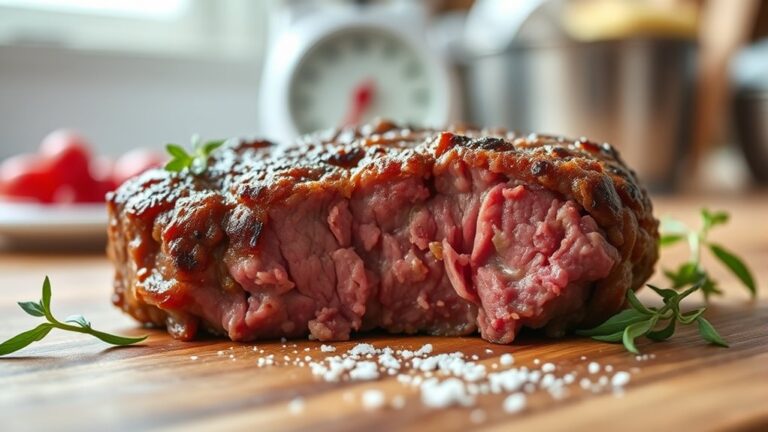
When you cook Boston butt, the temperature and texture can quickly reveal whether it’s pork or beef. Pork butt usually cooks to around 195°F and develops a pinkish hue with visible marbling and a fat cap. You’ll notice it shreds easily and uniformly, releasing a sweeter, milder flavor.
In contrast, beef shoulder needs to reach about 205°F for tenderness. It appears darker and more reddish, with less marbling but more connective tissue, making it denser and harder to pull apart. As you slice or pull the meat, listen and feel for the difference—pork pulls apart smoothly, while beef resists more.
These cooking clues will help you confidently identify if your Boston butt is pork or beef.
Frequently Asked Questions
How Can You Tell if Meat Is Pork or Beef?
You can tell if meat is pork or beef by its color, texture, and flavor. Pork is lighter, pinkish, and tender with a sweeter taste; beef is darker red, firmer, and has a richer, more intense flavor.
What Is a Pork Boston Roast?
A pork Boston roast is a flavorful cut from your pig’s upper shoulder, packed with fat and connective tissue.
You’ll love slow-cooking it for tender pulled pork or roasting it to juicy perfection every time.
Conclusion
Now that you know Boston butt is always pork, not beef, you’re better equipped to identify it next time. Remarkably, over 90% of barbecue lovers prefer pork Boston butt for its rich marbling and tenderness.
By looking at fat content, color, and cooking texture, you can easily tell pork Boston butt apart from beef cuts. So, trust your eyes and taste buds—they’ll guide you to the right choice every time!
Understanding how to identify Boston butt as beef or pork ensures you get the perfect cut for your meal. Use these tips to confidently pick pork Boston butt, recognizing its unique characteristics in any market or recipe.